01How this started
I always thought I came across new music serendipitously, as if I was always in the right place at the right time. And I thought, is this a transferable skill? Can I have more serendipitous discovery in my life?
How can I invite people to find more serendipity for themselves?
To find the answer to this question, I had to try many things, including experiments on myself.
02Research – into ambiguity
Serendipity sits so close to luck that it is hard to research, especially as a mindset rather than an event. So I looked for two kinds of people. Those whose work depends on the unexpected, and those whose days leave little room for it.
02.1Improvisers – the experts of the unexpected
I spoke to improv artists, street photographers, jazz musicians and DJs about how they find and deal with the unexpected.
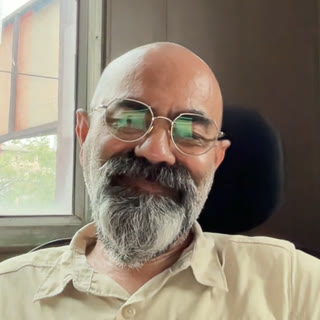


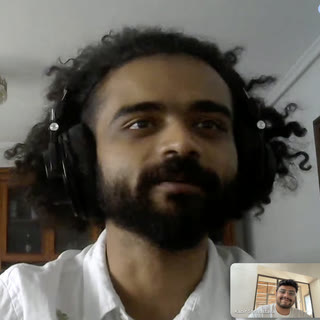

Vineet Vohra’s street photographs look staged but are just too perfectly timed. I asked him how he would teach someone to learn that skill. I expected him to say go somewhere new every day. Instead he said:
Walk the same 100 metres every day for 30 days. Each day, notice five new things.
02.2Everyone can derive joy out of the little things
I also spoke to people in fixed routines, including my domestic help, to see whether serendipity and privilege were connected in any way.




When I asked about discovering happiness, people talked about small things. Rhea described watching a child feed an animal. Aruna Didi talked about giving her nephew 10 rupees and watching him eat paani puri.
I watch my nephew butter me up all day to get 10 rupees and go eat paani puri. It brings me joy.
What the research showed
- 01
People do not always need new environments to encounter the unexpected. Sometimes they need a new way of seeing the environment they are in.
- 02
There are scales to serendipity. Small, everyday unexpected serendipity is accessible to everyone.
- 03
The unexpected needs a little courage. Improvisers say yes first, and make something of whatever comes.
03Experiments as prototypes
A lot of small experiments came before Remora. Some were inspired by stories and some by real-life serendipitous moments that happened to me. All of them lent something to how I got people to be curious again.
03.1Reimagining the self
My first experiment was a break time activity inspired by Hamid ka Chimta. Hamid finds joy in a pair of tongs by turning them into a gun, then a musical instrument. I wondered whether a change in imagination could make familiar objects interesting again.
People were asked to become detectives and auctioneers. Pick an object, examine its scratches and worn edges, and reconstruct something that might have happened to it.
A surface to reimagine objects
- Step 1Pick an object at random.
- Step 2You are a detective. Examine the object under light like evidence. Scratches, worn edges, faded print, residue.
- Step 3From the evidence alone, reconstruct one event in its past. This dent means it fell. From where? When? What was happening in the room? Build the case only from marks you can point to.
- Step 4Case closed! File the evidence back exactly where you found it.
People enjoyed the activity. But the table was a problem.
I want to move away from my table when I take a break.
I had designed something playful in a place people associated with work. Around then, a book I found on a walk reminded me where the interesting things had been happening all along, on the way to somewhere else. The next set of experiments moved out of the room and onto a route people were already taking.
03.4Noticing the environment
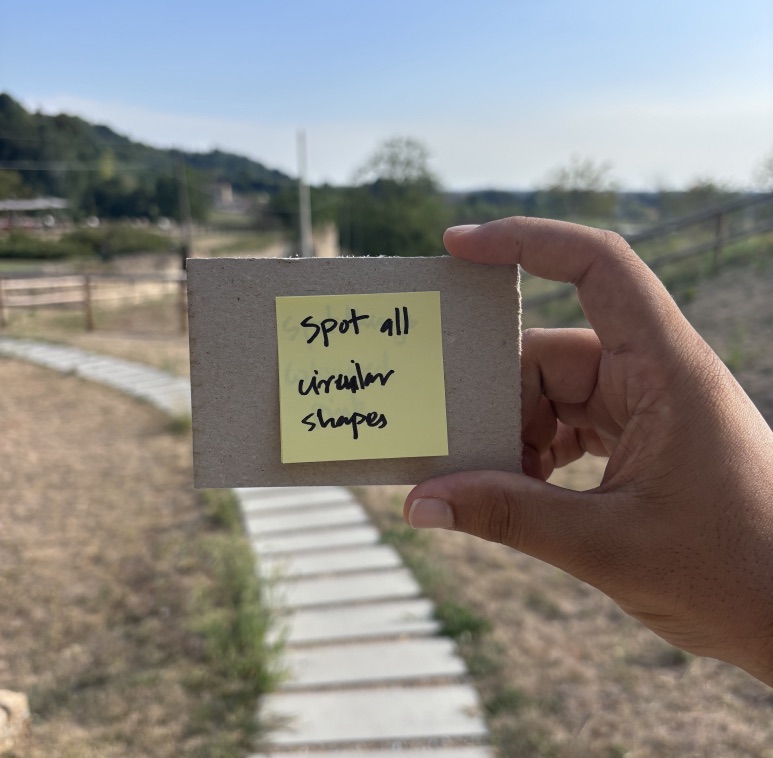
Inspired by Rob Walker’s The Art of Noticing, I prompted people to look for specific numbers, colours and shapes on their usual route home from school, as a way of seeing if it brings any unexpected joy.
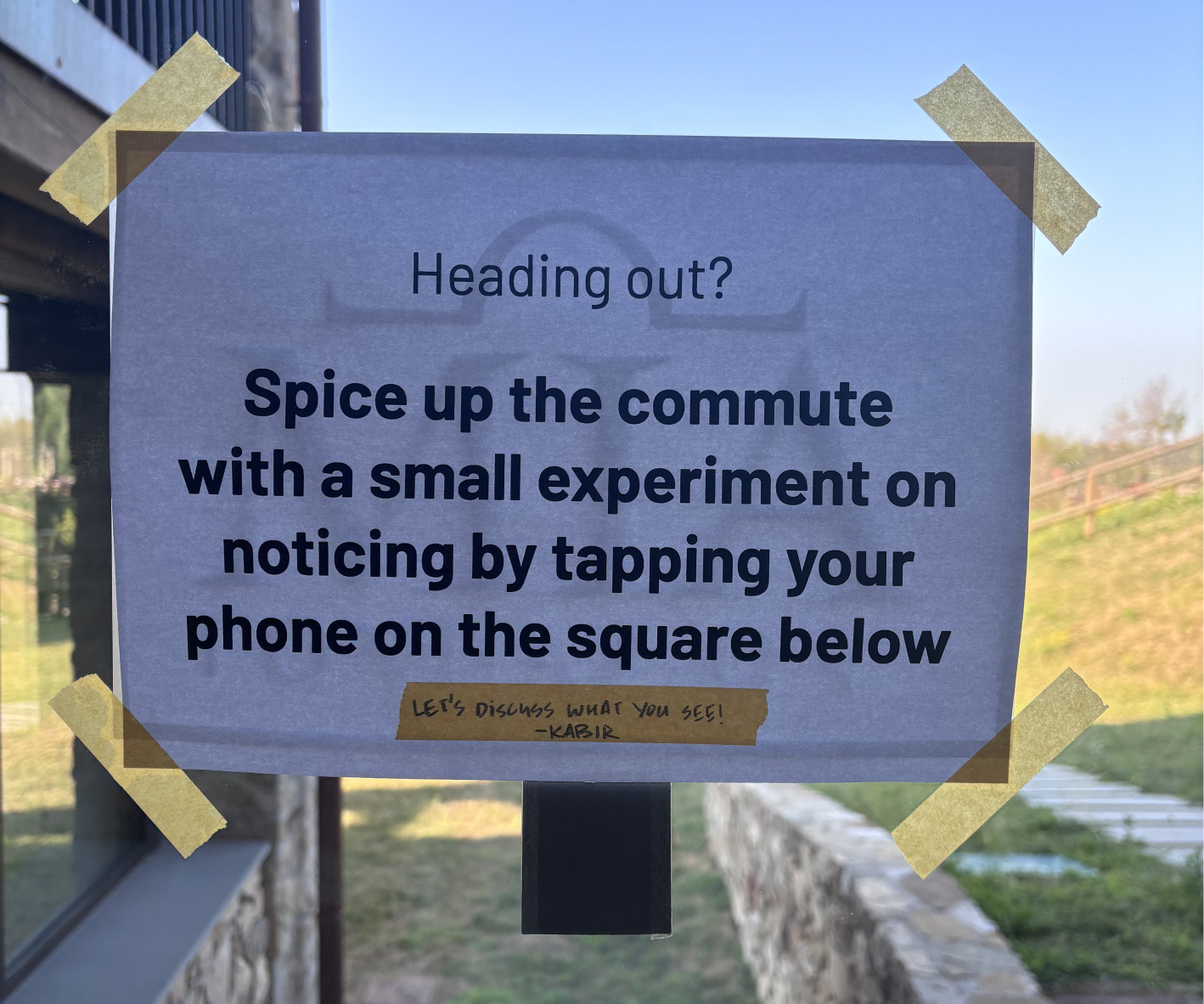
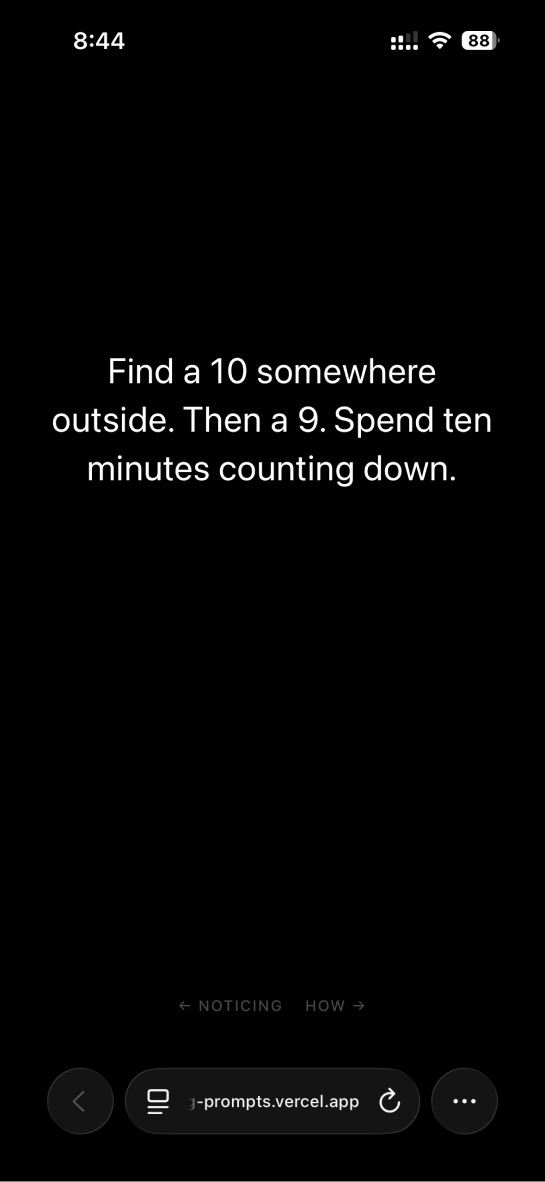
I had no idea I would see so much pink in the route I took everyday
It did! Something was clicking. People enjoyed looking at the paths they were so used to taking in a new light.
03.5Nudging towards others
The third experiment was notes in people’s pockets to pull out on a walk. Some asked for a detour. Others asked people to say hi to a stranger.
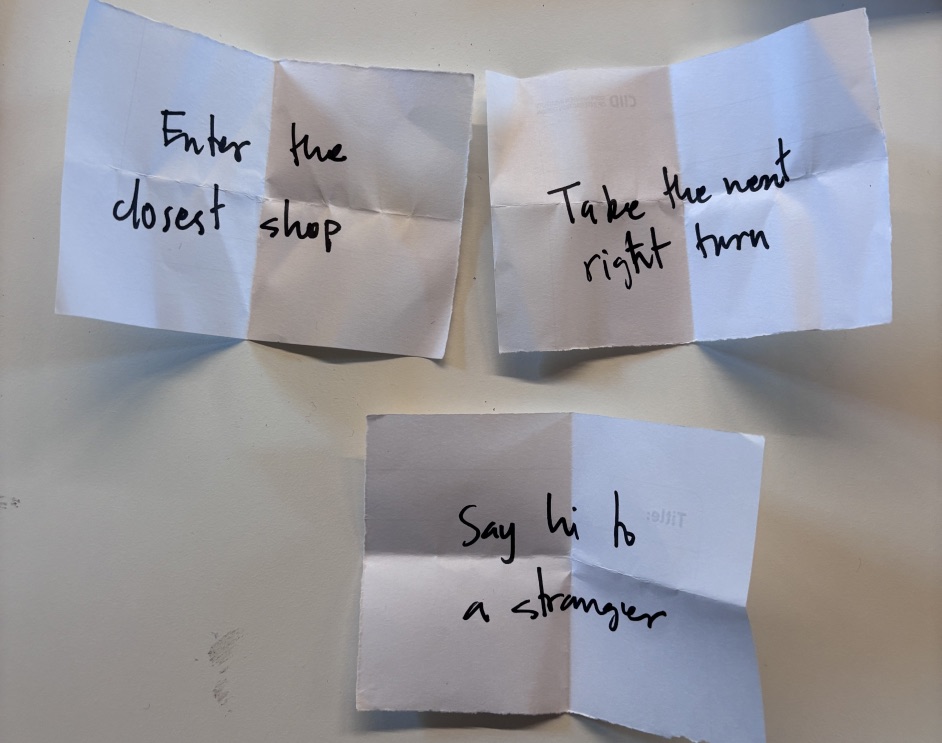
These notes became a small excuse to act. That became another part of what I wanted Remora to offer.
It felt like I had permission to be curious.
The note said walk into the next shop, and I walked into a coffee shop I always saw but had never been inside. They had really good croissants.
03.6A framework for the prompts
The experiments gave me a framework to create a new way of seeing the environment people were already in.
Self
Reframing your own situation, attention or imagination.
Environment
Re-seeing the street, room or route you are already in.
Others
A small, low-stakes interaction with another person nearby.
I used this framework to write the prompt bank.
04Why make an object?
The prompts were becoming the interaction. But the question about where they would appear was still unanswered. The phone was the natural answer, but it was also an object that pulls people in and distracts them.
…during commutes it’s hard, sometimes I pick up the phone even though there’s nothing new to see.
I took a leap and went for a physical object that provides the prompt. Yet it had to be different from the phone, and counter what it does, asking people to look up rather than look down.
04.1A fish, a situationship
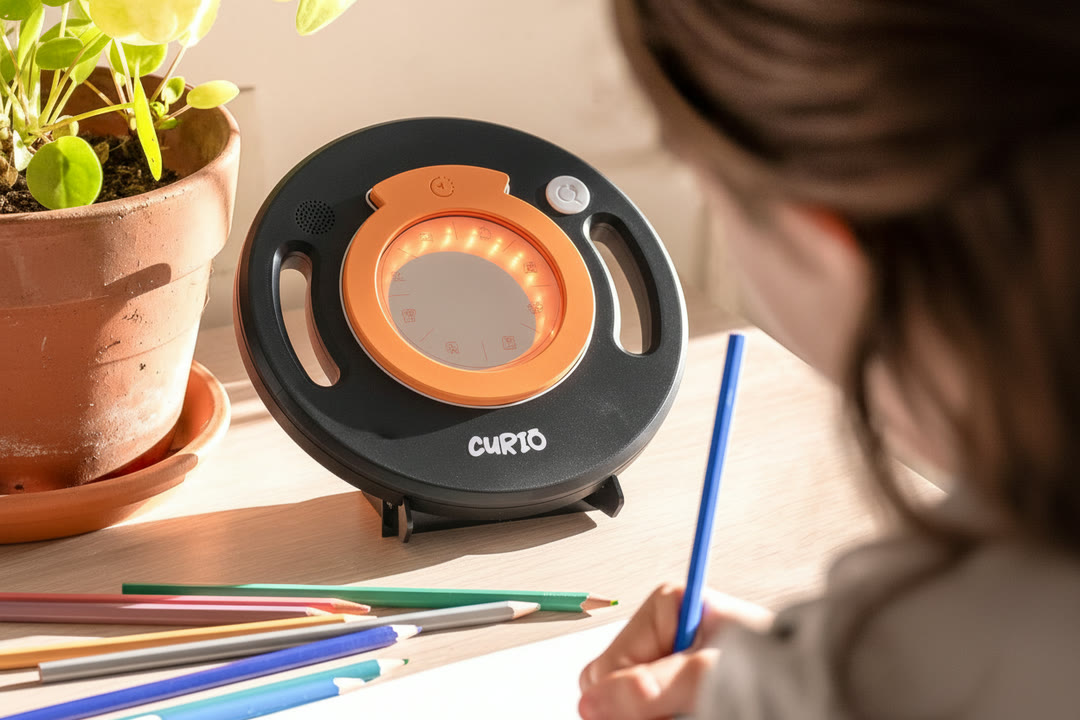
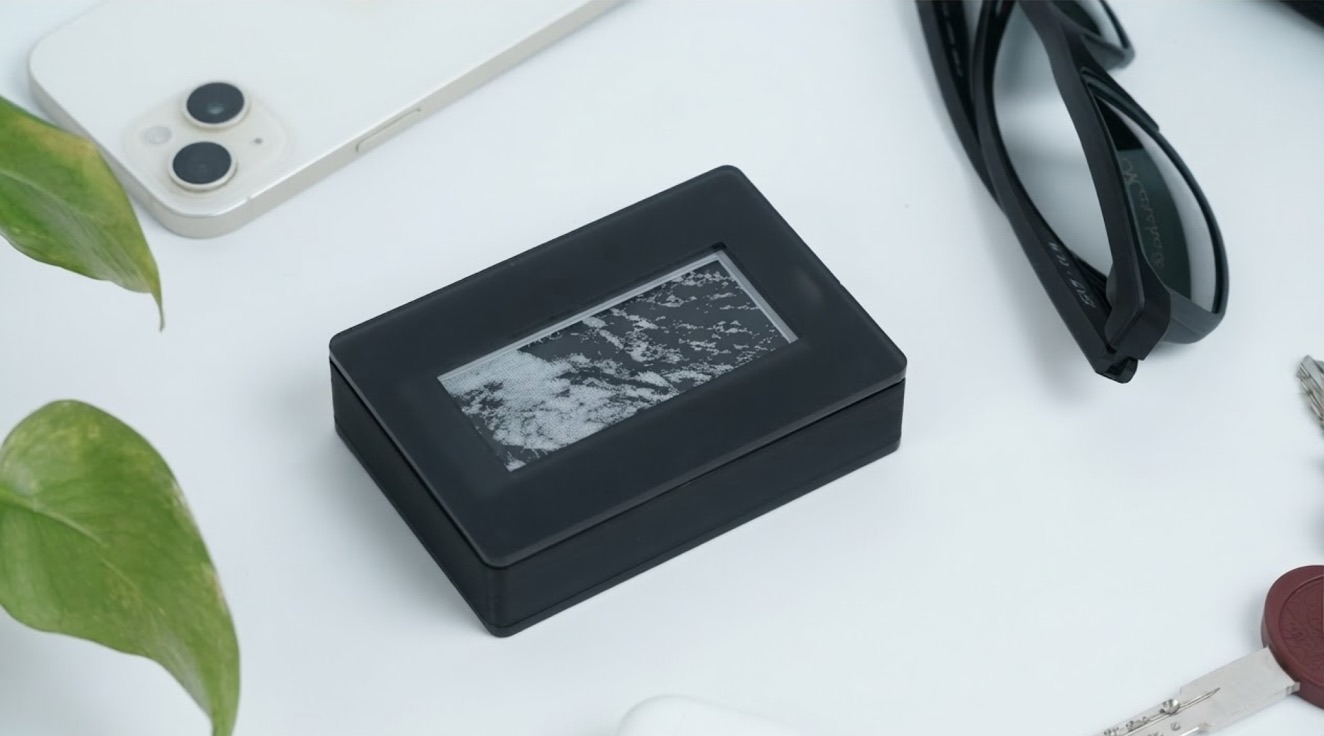
Remora takes its name from the remora fish that hitches a ride on a shark’s belly (with a suction cup as a dorsal fin). Your phone is the shark of the attention economy, and Remora lives on it, becoming an accessory to take along with you.

04.2Something to do, not something to scroll
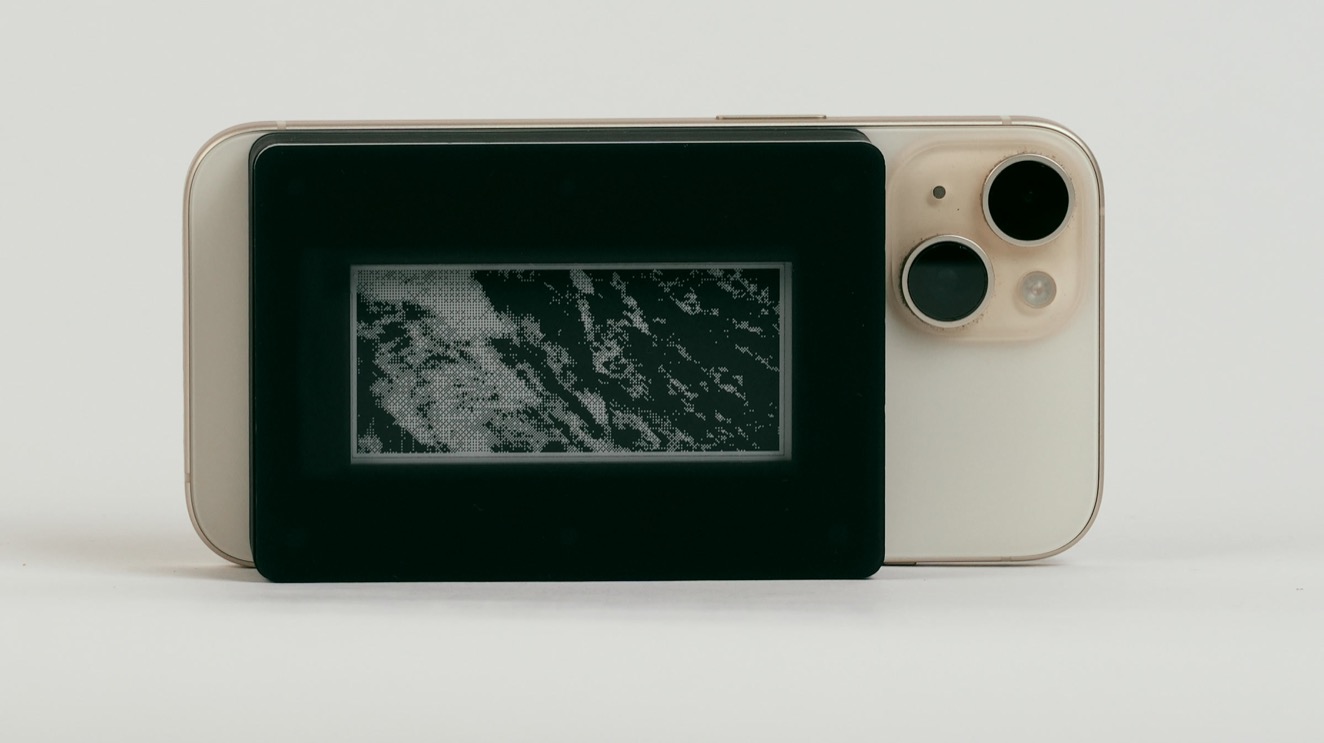
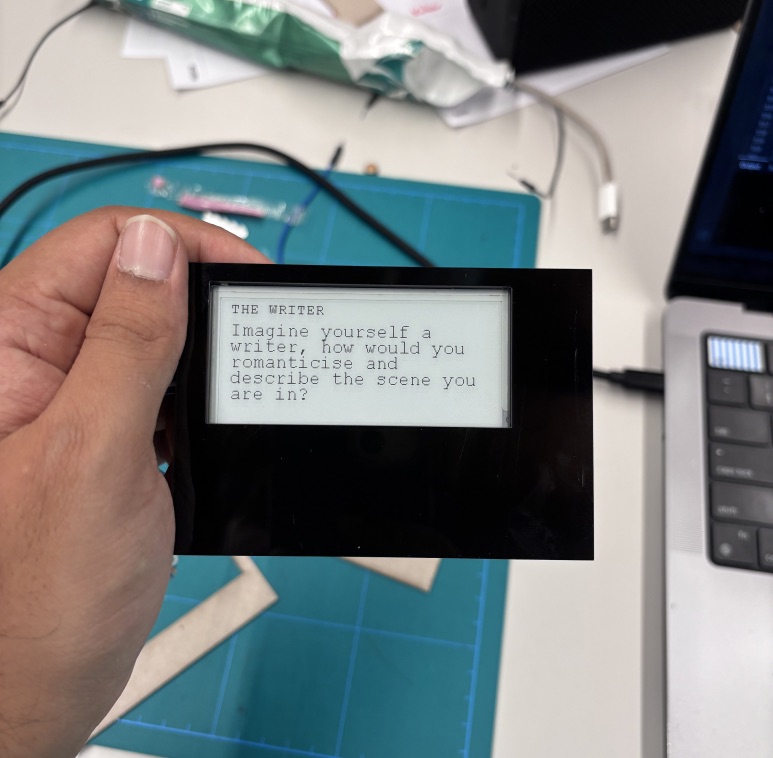
Remora gives you one prompt at a time on a slow, black and white e-ink screen. It provides a starting point and lets you look around. The slowness is deliberate. I did not want the object asking for the attention that it was supposed to give back.
Try it
Take Remora anywhere on the page. Drag it onto the phone, or away from it, then click or tap it to shake it.
Prompts can also ask for more courage the further you are from the phone. That is a design hypothesis, not something the digital study tested.
Attach it
Remora attaches to the back of the phone with MagSafe. An NFC chip inside it tells the phone to go into Do Not Disturb mode, turn its screen grey and hand you a prompt. It also understands some context of where you are, since our phones carry enough data for that. Away from the phone, it becomes something you can take on a walk.
Shake it
Shaking became the way to ask for a prompt. You shake dice because you want an outcome you did not choose. By the time you read the prompt, you have already invited a bit of randomness in.
A motion sensor recognises the shake. A backend serves the prompts and controls the display.
Shake it next to the phone
Beside the phone, it refuses to offer you a prompt, asking you to either move away from the phone or dock with it.
04.4Finding the form
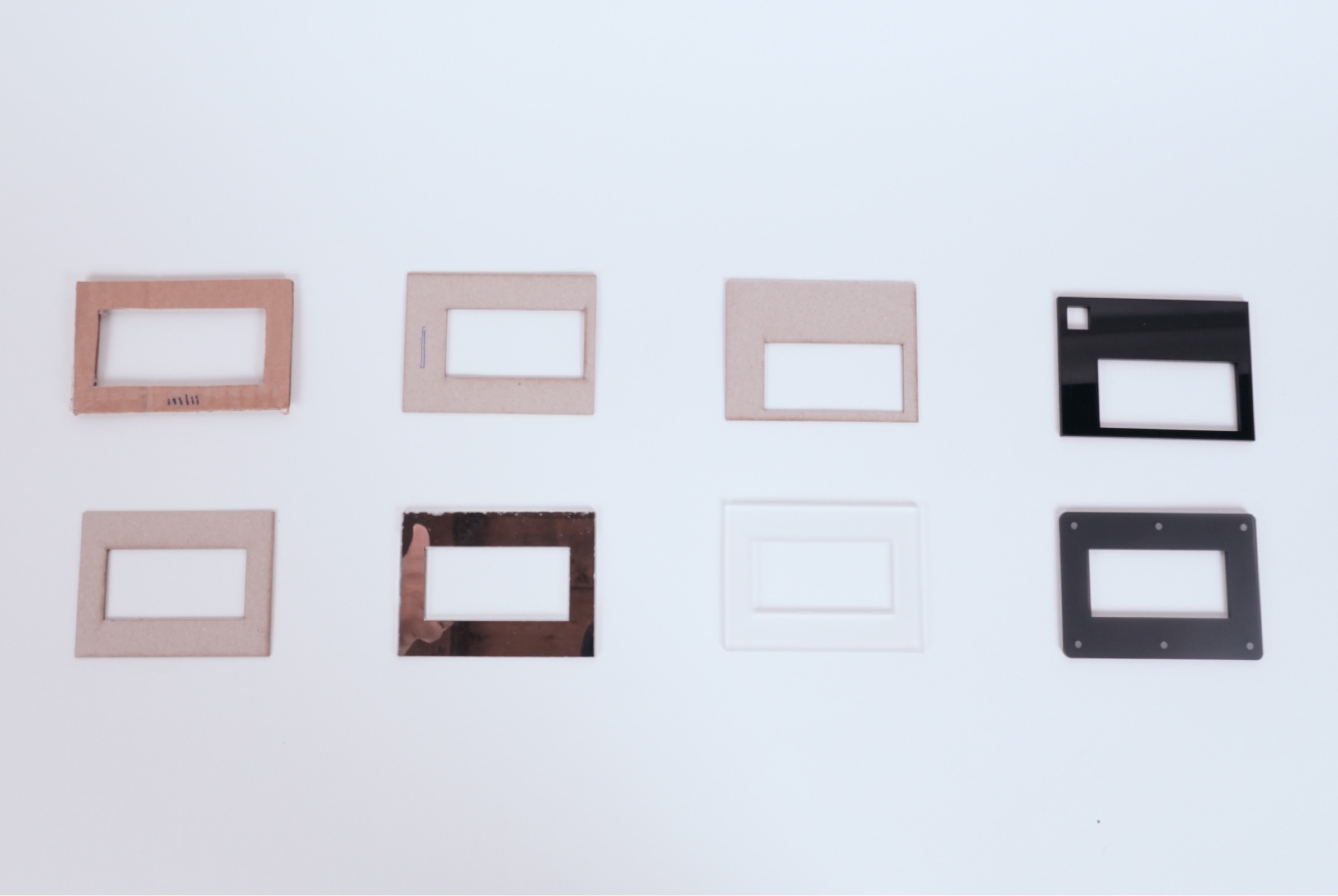
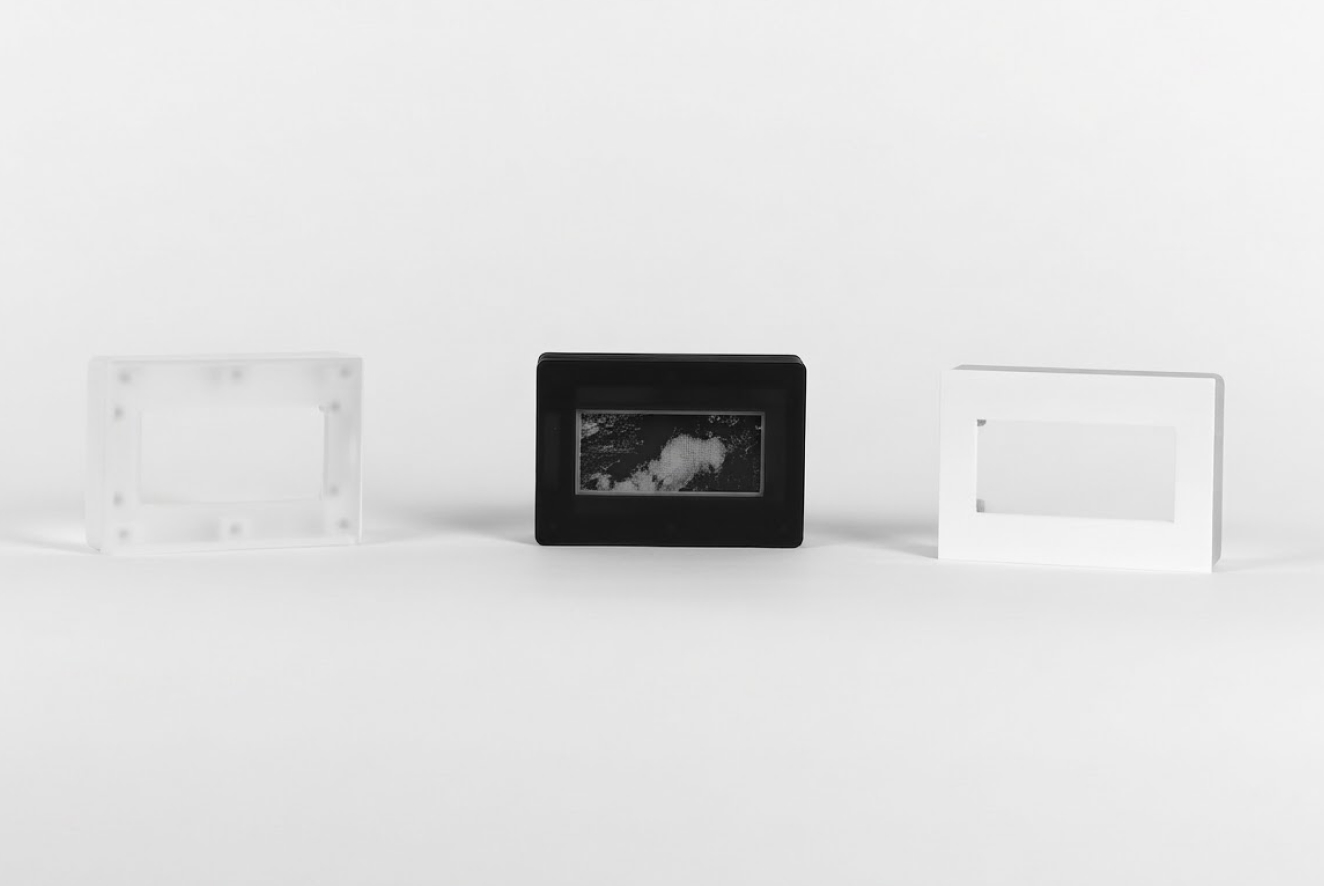
The physical prototypes helped me work through the frame’s proportions, screen position and finish. It took several variations to find a form that felt nice, and also intriguing. Before you shake for a prompt, you see the clouds overhead.
04.6Open source
Remora embodies the openness it encourages, so it is open source. The code and prompt bank are there for a community of curious people to build on, add their own prompts to, or take somewhere I would not have thought of.
GitHub05Testing the prompts
Seven testers in four countries used a digital version of Remora at home, at work, in cafes and on the commute. Rhea was a long-term tester. She used Remora for 20 straight days, so I could see how it felt over a longer stretch.
Also, testing in the same room did not work. Being watched turned noticing into a performance. So I moved testing into people’s own routines, with a short catch-up every day.
Across 173 prompts, I received 32 feedback replies, and each went back into the prompt bank. I wrote every prompt, while AI adapted them to the context they landed in.
What testing showed
- 01
Prompts need context. A prompt could be interesting on a walk and fall flat at a desk. So Remora takes context from the phone when attached, to offer something possible rather than simply something unexpected.
Before · alone at home, 11 pm
Say hi to someone near you.After · same moment, with context
Find a lit window across the street. Imagine the last song played in that room. - 02
A small prompt can go a long way. Rhea was asked to find the sleepiest person at Bombay airport at 3 am. It ended with her handing a stranger back her lost phone.
- 03
Curiosity is personal. What draws you in might not be the same for someone else. So Remora needs some context of the person, not just the place, to suit them better.
- 04
People want to keep what they find. So Remora leaves a small trace on the phone when detached. A note, a calendar nudge or a playlist for the way.
05.2What I would test next
Testing did not show whether repeated use builds a lasting capacity for serendipity, or whether an object works better than a phone. Next, I would test three things.
- 01
Whether people still reach for Remora once the novelty wears off.
- 02
Do you build a habit for noticing? And how long does it take?
- 03
At what point does a helpful nudge start making curiosity feel like a forced thing?
06What I am taking from this
At times I had no idea where the project was headed. A few things kept me going.
- 01
Let the research change the brief. I started out looking for new things to stumble on, and ended up designing for the places people already are. The research changed where I looked, the experiments changed where the interaction happened, and testing changed how I thought about the prompts.
- 02
Keep a serendipitous mindset. Open to detours, brave enough to take big leaps, curious about other people’s stories, and willing to let go of an idea.
- 03
Trust the process and the people who care about you.
The object grew out of those decisions, rather than being the thing I set out to make.